.webp)
Wild Fruits of the Andaman Forests: Rare Tropical Treasures of India’s Island Rainforests
Updated: Mar 24
Hidden Edible Treasures of the Andaman Rainforests
The lush tropical forests of the andaman islands hide an incredible diversity of wild fruits rarely seen outside the jungle. While the islands are famous for white sand beaches and coral reefs, the dense interior forests contain a fascinating variety of edible plants that have sustained wildlife and indigenous communities for centuries.
Many of these fruits grow naturally in untouched rainforest ecosystems, ripening seasonally and providing food for birds, bats, and humans alike.
For visitors exploring islands such as Swaraj Dweep (havelock island), discovering these wild fruits offers a glimpse into the remarkable biodiversity that makes the Andaman forests one of India’s most unique natural environments.
Pandanus (Screw Pine Fruit)

The distinctive fruit of Pandanus tectorius is one of the most recognizable wild fruits found along the Andaman coastlines. The fruit looks like a bright orange pineapple made up of many wedge-shaped sections called “keys”.
Characteristics
Grows in coastal forests and sandy soils
Segments contain edible fibrous pulp
Mild sweet taste when chewed
Leaves traditionally used for weaving mats and baskets
Pandanus trees are commonly seen near beaches and forest edges throughout the islands.
Sea Almond (Indian Almond)

The tropical almond tree (Terminalia catappa) grows abundantly along the coastlines of the Andaman Islands. Although the fruit itself has only a thin edible flesh, the seed inside contains a nut with a mild almond-like flavor.
Interesting facts
Thrives in sandy coastal environments
Nuts are edible and nutritious
Leaves turn vivid red before falling
Provides shade and habitat for wildlife
Sea almond trees are a common sight along Andaman beaches and coastal forests.
Elephant Apple

The unusual fruit of Dillenia indica, commonly known as elephant apple, is found deep within tropical rainforests. The fruit is large, round and green with thick layers surrounding a very sour pulp.
Uses and features
Pulp used in chutneys and curries
Extremely sour flavour
Important food source for wildlife
Found throughout tropical Asian forests
Despite its sour taste, elephant apple has long been used in traditional cooking across South and Southeast Asia.
Wild Nutmeg
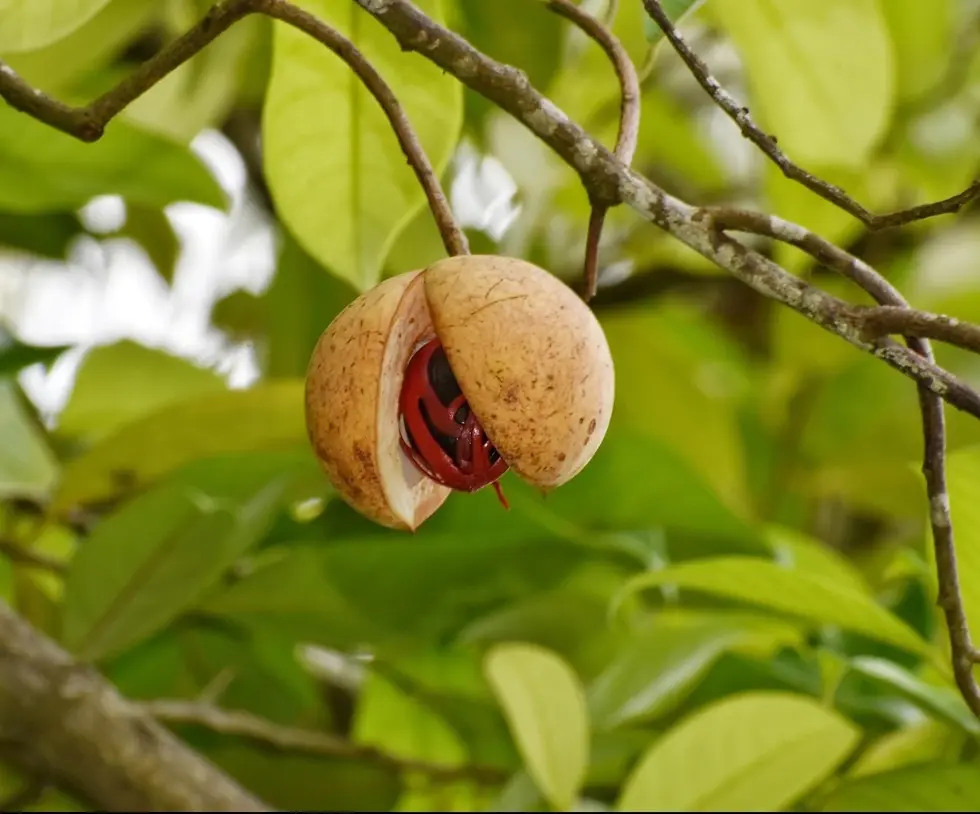
Several species of wild nutmeg grow in the humid forests of the Andamans, belonging to the genus Myristica. When ripe, the fruit splits open to reveal a dark seed surrounded by a bright red covering called mace.
Why it is fascinating
Close relative of commercial nutmeg spice
Highly aromatic seeds
Important rainforest tree species
Seeds dispersed by birds and mammals
Wild nutmeg trees are a characteristic feature of tropical rainforest ecosystems.
Jamun (Java Plum)

The deep purple fruit of Syzygium cumini, commonly known as jamun, grows naturally across India and in parts of the Andaman forests.
Taste and benefits
Sweet with slightly astringent flavor
Stains the tongue deep purple
Traditionally believed to support blood sugar balance
Often eaten fresh or made into juices and preserves
When jamun trees are fruiting, they attract birds and fruit bats.
Wild Forest Berries of the Andamans
Beyond the larger fruits, the forests of the Andamans contain dozens of small berry-producing plants belonging to genera such as Syzygium and Garcinia.
Ecological importance
Food for birds, bats
Ripen seasonally during monsoon months
Help spread seeds throughout the forest
Maintain biodiversity in tropical ecosystems
Many of these fruits remain largely unknown outside the forest.
Indigenous Knowledge of Forest Foods
For centuries, indigenous communities such as the and have relied on forest fruits as part of their traditional diets.
Their knowledge of the forest allows them to harvest these foods sustainably while protecting the delicate rainforest ecosystem.
Discovering Nature Beyond the Beaches
While the Andaman Islands are famous for turquoise waters and coral reefs, the tropical forests offer a completely different natural experience. Hidden among the trees are unique fruits that form part of a living rainforest pantry.
Exploring the forests around the islands reveals a side of the Andamans that many visitors never see — a rich ecosystem where wildlife, plants and people have coexisted for generations.


