.webp)
From Displacement to Belonging: The Story of Havelock Island’s Settlers

Today, Havelock Island (Swaraj Dweep) is known for turquoise waters and world-famous beaches, just like our own vijaynagar beach right in front of Emerald Gecko Resort!. But beneath its calm surface lies a powerful human story—one of displacement, resilience, and the quiet building of a new world from nothing.
A Journey Born Out of Partition
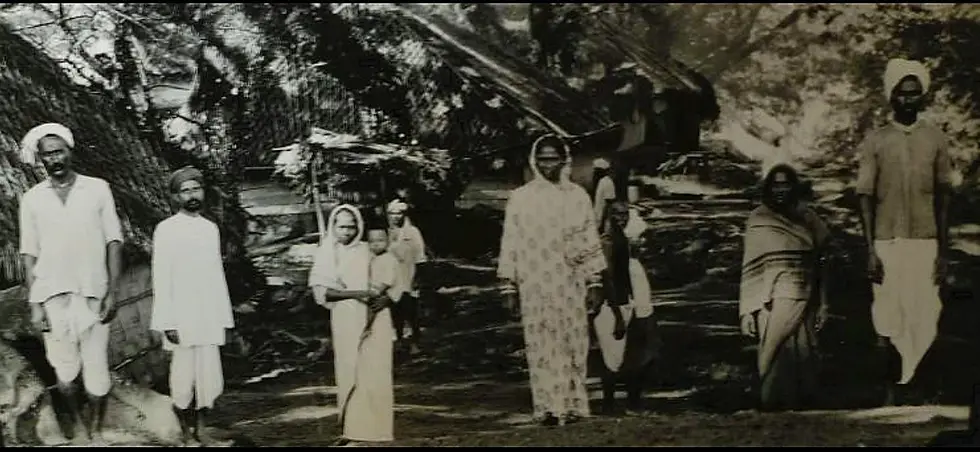
The roots of Havelock’s community trace back to one of the most traumatic events in South Asian history: the Partition of India in 1947. Thousands of Bengali Hindu families fled what was then East Pakistan (present-day Bangladesh), escaping violence, loss, and uncertainty.
Many of these families spent years in refugee camps across mainland India, especially in West Bengal. Life in the camps was harsh—crowded, uncertain, and temporary. Eventually, the Indian government began searching for long-term rehabilitation solutions for these displaced populations.
The Government Settlement Schemes
In the 1950s–1970s, under policies shaped by the central government during the era of leaders like Indira Gandhi, the Andaman Islands became a key site for refugee rehabilitation and national development.
Thousands of Bengali refugee families were transported by ship from Kolkata to these remote islands. Official schemes aimed to do two things:
Provide displaced people with land and a new beginning
Strengthen India’s presence in this strategic region
In total, several thousand refugee families were settled across the Andamans under these programs.
What They Were Given—and What They Weren’t
The settlers did not arrive to ready-made homes or infrastructure. Instead, they were given only the bare essentials:
A plot of land (often dense forest)
Basic tools
Limited monthly rations for survival
Everything else had to be created from scratch.
There were no proper roads, electricity, or healthcare facilities. The land itself was thick jungle—wild, humid, and unfamiliar. Early settlers recall fear of the forests, isolation from the mainland, and constant shortages of food and materials.
Carving Life Out of the Jungle

What followed was an extraordinary human effort.
Families cleared forests manually, cutting through dense vegetation to make space for huts and farms. They built their own homes using wood, leaves, and whatever materials they could source locally. Agriculture became the backbone of survival—rice, vegetables, and small-scale farming slowly replaced dependence on government rations.
Fishing, carpentry, and trade evolved organically. Villages like Govinda Nagar, Vijaynagar, and Shyam Nagar—today familiar names on Havelock—were once just patches of cleared land in the wilderness.
Life was not just physically demanding—it required psychological resilience. These settlers were building not only houses, but identity, stability, and hope.
The Emergence of a Unique Island Culture

Over time, something remarkable happened: a distinct sub-culture emerged.
While the settlers carried strong Bengali roots—language, food, festivals—they adapted to island life in unique ways. This created a hybrid identity:
Bengali traditions blended with island rhythms
Fishing lifestyles merged with agrarian practices
Community bonds strengthened through shared struggle
Scholars often describe this as a dual belonging—both “Indian” and deeply “Bengali,” yet shaped by the isolation and environment of the islands.
Even today, this is reflected in:
Cuisine (fresh seafood with Bengali spices)
Language (Bengali widely spoken alongside Hindi and English)
Festivals celebrated in a tropical, coastal setting
From Frontier to Destination
What began as a remote rehabilitation experiment gradually transformed into a thriving community. Over decades, infrastructure improved, tourism developed, and Havelock Island became one of India’s most sought-after destinations.
Yet, the demographic foundation remains rooted in those early settlers—many of whom or whose descendants still live on the island today.
A Living Legacy
The story of Havelock Island is not just about migration—it is about creation.
It is about people who arrived with almost nothing and built:
Villages from forests
Livelihoods from uncertainty
A culture from memory and adaptation
Their legacy lives quietly in the island’s everyday life—in its homes, its food, its language, and its sense of community.
For visitors, Havelock may feel like paradise. But for those who know its past, it is something deeper: a testament to human resilience and the power of starting again.


